Now Reading: Best AI SEO Tools for Beginners (2026 Guide)
-
01
Best AI SEO Tools for Beginners (2026 Guide)
Best AI SEO Tools for Beginners (2026 Guide)

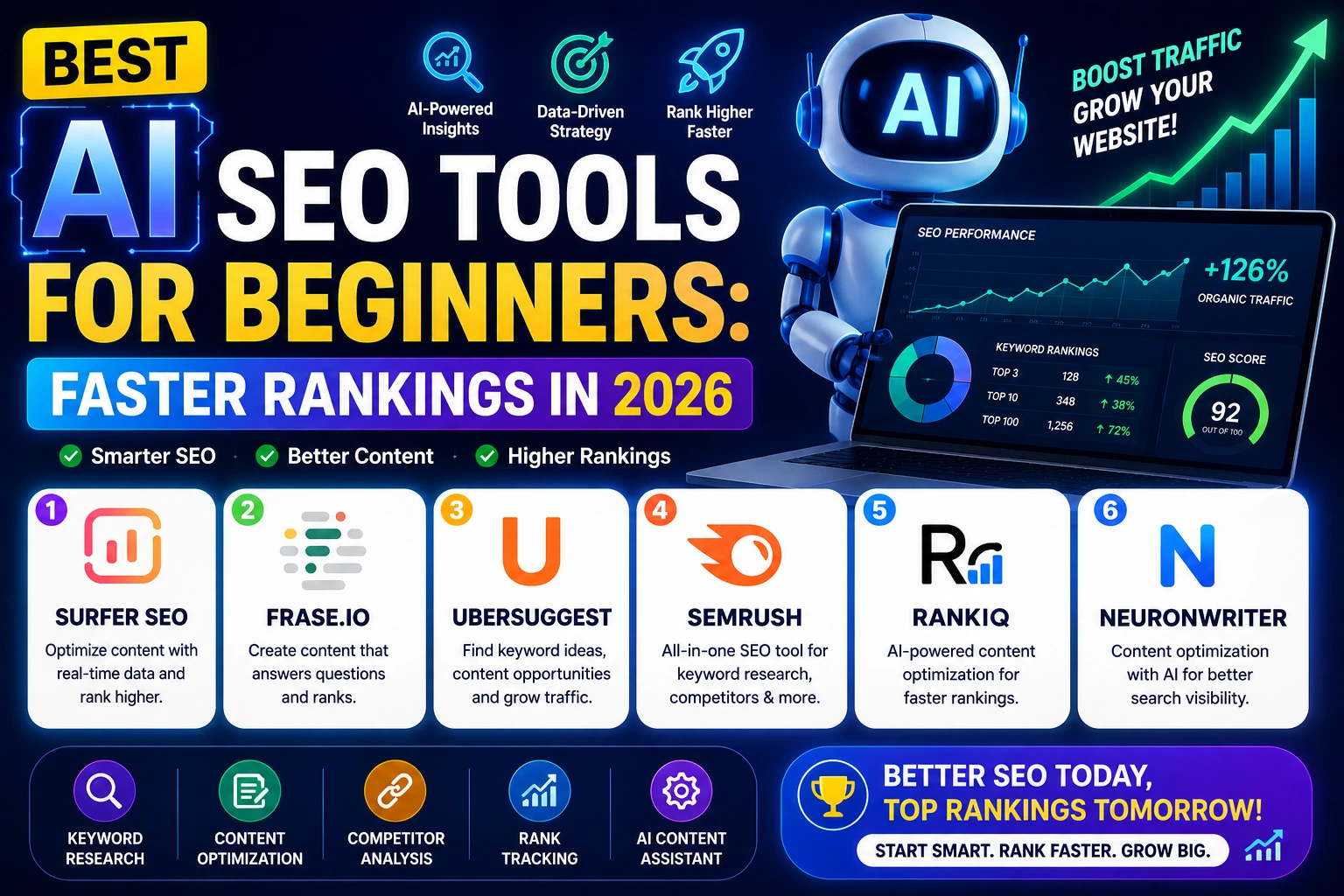
If you’ve ever stared at a blank content calendar wondering why your website isn’t showing up on Google, you’re not alone. SEO can feel like a maze of jargon, algorithms, and endless checklists. The good news? AI SEO tools for beginners have made this process far less intimidating than it used to be.
Table of Contents
- Introduction
- Why Beginners Need AI SEO Tools
- What to Look for in AI SEO Software
- Top AI SEO Tools for Beginners
- How to Choose the Right Tool for You
- How to Use AI SEO Tools Effectively
- Conclusion
- FAQs
Introduction
These tools handle the heavy lifting keyword research, content optimization, technical audits, and more so you can focus on actually running your business or growing your blog. In this guide, we’ll walk through what these tools do, which ones are worth your time, and how to use them without getting overwhelmed.
By the end, you’ll have a clear picture of which AI SEO software fits your needs, your budget, and your skill level.
Why Beginners Need AI SEO Tools
Search engine optimization used to require years of experience to do well. You needed to understand technical site structure, keyword competition, content gaps, and constantly shifting Google algorithms.
AI has changed that equation. Today’s SEO automation tools can analyze thousands of data points in seconds work that would take a human analyst days to complete manually.
For beginners, this means:
- Faster learning curve. You see what works without guessing.
- Time savings. Automated audits and suggestions cut research time dramatically.
- Reduced errors. AI flags issues like duplicate content or missing meta tags before they hurt rankings.
- Better content quality. AI content optimization tools suggest improvements based on real ranking data, not just opinions.
That said, AI tools aren’t magic wands. They work best when paired with genuine effort, quality writing, and patience. SEO is still a long game.
What to Look for in AI SEO Software
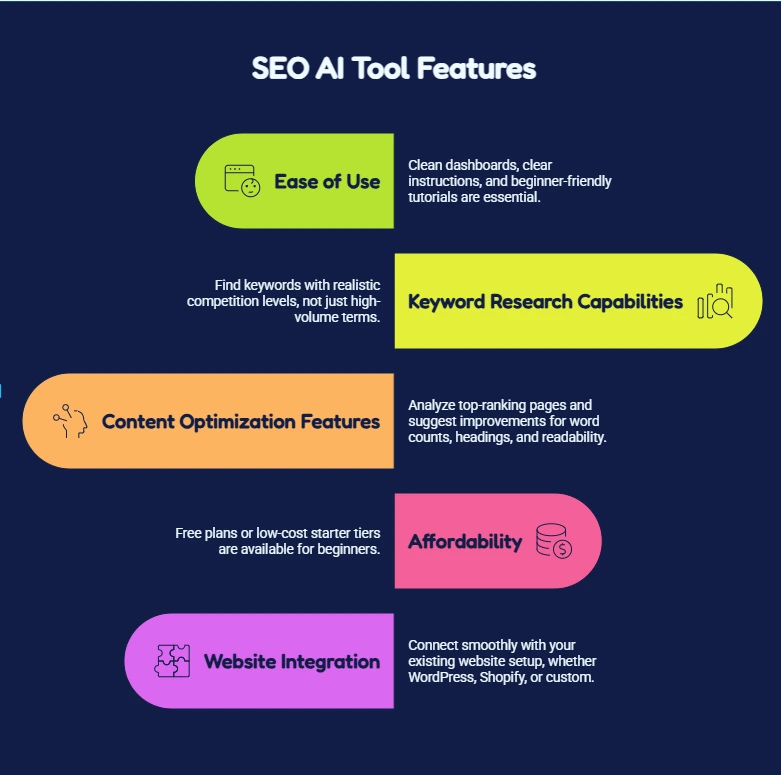
Before jumping into specific tools, it helps to know what separates a useful tool from a flashy one. Here’s what matters most for someone just starting out.
1. Ease of Use
If a tool requires a steep learning curve, it defeats the purpose. Look for clean dashboards, clear instructions, and beginner-friendly tutorials.
2. Keyword Research Capabilities
A solid AI ranking software should help you find keywords with realistic competition levels not just high-volume terms that are impossible to rank for as a new site.
3. Content Optimization Features
This is where AI content optimization shines. Good tools analyze top-ranking pages and suggest word counts, headings, related terms, and readability improvements.
4. Affordability
Many beginners don’t have huge budgets. Thankfully, several tools offer free plans or low-cost starter tiers that are genuinely useful, not just watered-down demos.
5. Integration with Your Website
Whether you’re on WordPress, Shopify, or a custom site, your SEO AI assistant should connect smoothly with your existing setup.
Top AI SEO Tools for Beginners
Let’s get into the actual recommendations. These tools were chosen based on usability, value for money, and how well they support people new to SEO.
Surfer SEO
Surfer SEO is one of the most popular AI content optimization tools, and for good reason. It analyzes top-ranking pages for any keyword and gives you a content score based on word count, structure, keyword usage, and more.
Best for: Writers and bloggers who want data-backed guidance while drafting content.
Why beginners like it: The interface is visual and intuitive. You can see exactly what’s missing from your draft compared to competitors, almost like a report card for your blog post.
Things to know: It doesn’t have a free plan, but the entry-level tier is reasonably priced for solo creators.
Frase.io
Frase combines AI writing assistance with SEO research. It pulls data from top search results and helps you build content briefs, outlines, and even first drafts.
Best for: Beginners who struggle with where to start when writing SEO content.
Why beginners like it: It shortens the research phase significantly. Instead of manually checking ten competitor articles, Frase summarizes the key topics they cover.
Things to know: The AI-generated drafts need human editing they’re a starting point, not a finished product.
Ubersuggest
Created by Neil Patel, Ubersuggest is often recommended as one of the most beginner-friendly SEO automation tools available.
Best for: People who want an all-in-one tool covering keyword research, site audits, and backlink analysis.
Why beginners like it: It has a generous free tier, and the dashboard explains metrics in plain language rather than confusing acronyms.
Things to know: Some advanced features are limited unless you upgrade, but the free version alone is enough to get started.
SEMrush (with AI features)
SEMrush is a heavyweight in the SEO world, and it has steadily added AI-powered features like content templates, SEO writing assistants, and topic research tools.
Best for: Beginners who plan to grow into more advanced SEO work over time.
Why beginners like it: It scales with you. You won’t outgrow it quickly, which saves the hassle of switching tools later.
Things to know: It can feel overwhelming at first due to the sheer number of features. Stick to the basics initially.
RankIQ
RankIQ is designed specifically for bloggers. It uses AI to identify low-competition keywords and provides content optimization checklists tailored to each topic.
Best for: Niche bloggers focused on organic traffic growth.
Why beginners like it: The keyword library is curated, so you’re not wading through thousands of irrelevant suggestions.
Things to know: It’s narrower in scope compared to all-in-one platforms, but that simplicity is part of its appeal.
NeuronWriter
NeuronWriter blends content optimization with competitor analysis, offering a clean interface that’s less cluttered than some bigger platforms.
Best for: Beginners who want strong content guidance without paying premium prices.
Why beginners like it: It’s affordable and focuses on what matters most for ranking content relevance and structure.
Things to know: The keyword database may be slightly smaller than larger competitors, but it’s sufficient for most beginner needs.
How to Choose the Right Tool for You
With so many options, it’s easy to feel stuck deciding. Here’s a simple way to narrow things down.
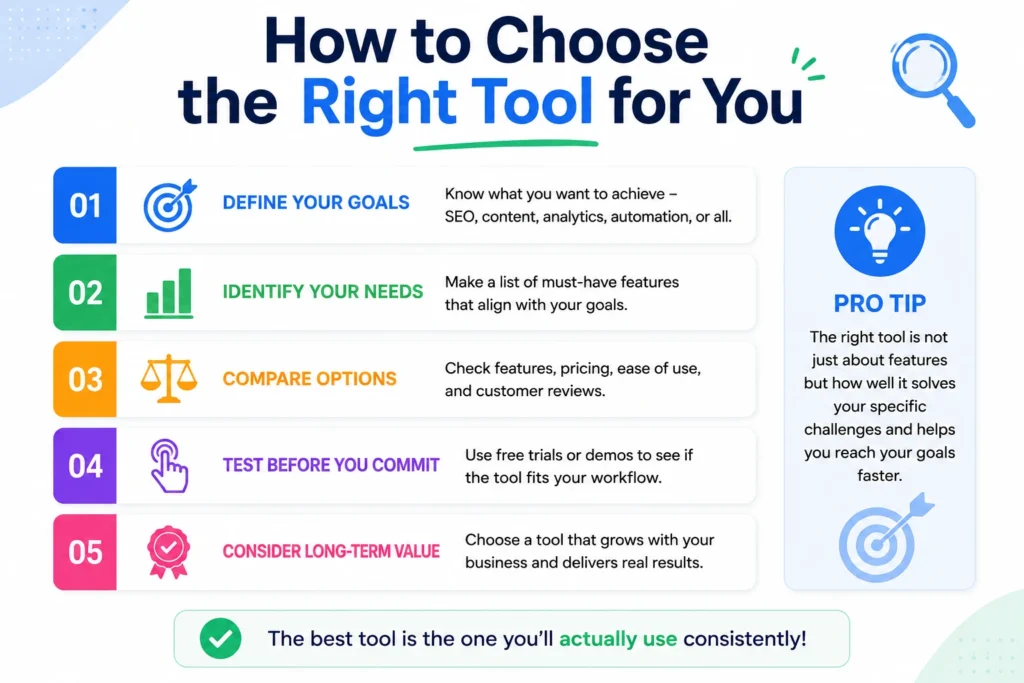
Start with Your Main Goal
Are you primarily writing content? Then prioritize AI content optimization tools like Surfer or Frase. Are you more focused on technical site health? Then an all-in-one platform like SEMrush or Ubersuggest makes more sense.
Consider Your Budget
It’s tempting to want every feature available, but starting with a free or low-cost tool lets you build habits before investing more money.
Think About Your Time Commitment
Some tools require more setup and learning than others. If you only have a few hours a week for SEO, choose something with quick, actionable suggestions rather than deep technical reports.
Test Before Committing
Most AI SEO tools offer free trials. Use that window to test real workflows — write an article, run an audit, check keyword suggestions before signing up for a paid plan.
How to Use AI SEO Tools Effectively
Owning the right software is only half the battle. Here’s how to actually get results from it.
- Don’t rely on AI suggestions blindly. Use them as guidance, then apply your own judgment about what fits your audience.
- Focus on one or two tools at a time. Juggling five different platforms creates confusion, not clarity.
- Track your progress monthly. SEO results take time usually a few months so patience matters more than constant tool-switching.
- Combine AI insights with real reader feedback. Comments, time-on-page, and bounce rates tell you things AI scores can’t.
- Keep learning the basics. Understanding why a tool suggests something helps you make smarter decisions long-term.
Expert Insights: Best Practices and Common Mistakes
Best Practices
- Treat AI tools as assistants, not replacements for strategy.
- Prioritize content that genuinely answers user questions AI tools can highlight gaps, but human insight fills them.
- Regularly update older content based on new AI-driven suggestions; SEO isn’t a one-time task.
- Use AI for research and structure, but write in your own voice to maintain authenticity.
Common Mistakes Beginners Make
- Over-optimizing content based purely on AI scores, which can make writing feel stiff or unnatural.
- Ignoring technical SEO while focusing only on content tools.
- Expecting instant results. Even the best AI ranking software can’t bypass the time it takes for search engines to trust a new site.
- Switching tools too often, which makes it hard to track what’s actually working.
Professional Recommendation
If you’re just starting out, pick one content optimization tool and one all-in-one platform with a free tier. Master those before adding anything else to your toolkit.
Conclusion
Choosing the right AI SEO tools for beginners doesn’t have to be complicated. Start by identifying your main goal whether that’s better content, technical fixes, or keyword research and pick one tool that addresses it well.
Remember that these tools are designed to support your efforts, not replace the thoughtful work of understanding your audience and creating genuinely useful content. With consistent use and a bit of patience, AI SEO software can make a noticeable difference in how your site performs over time.
Start small, stay consistent, and let the data guide your next steps.
FAQs
1. Are AI SEO tools really effective for beginners?
Yes, especially for tasks like keyword research and content structure. They simplify processes that would otherwise require years of experience to do well.
2. Do I need to pay for AI SEO software to see results?
Not necessarily. Tools like Ubersuggest offer strong free plans that cover the basics. Paid tools become more useful as your site grows.
3. Can AI tools guarantee higher rankings?
No tool can guarantee rankings, since Google’s algorithm considers many factors, including competition and user experience. AI tools improve your odds by guiding better decisions.
4. How long does it take to see SEO results using these tools?
Typically three to six months, depending on your niche, competition, and consistency. SEO is a gradual process, not an overnight fix.
5. Should I let AI write my entire blog post?
It’s better to use AI for outlines, research, and suggestions, then write or edit the final content yourself. This keeps your voice authentic and avoids generic-sounding content.
6. What’s the difference between an SEO AI assistant and a traditional SEO tool?
Traditional tools mainly provide data, like search volume or backlink counts. An SEO AI assistant interprets that data and offers specific recommendations, such as which headings to add or which keywords to target.
7. Is it safe to use multiple AI SEO tools together?
Yes, but it’s best to start with one or two. Using too many at once can lead to conflicting suggestions and analysis paralysis.